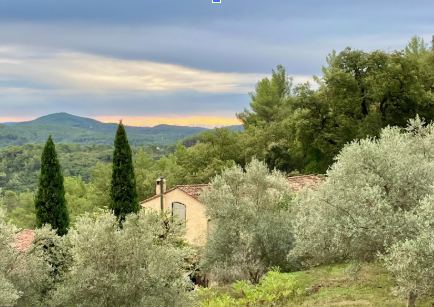
This region of Cote D’zur-Provence is a tourist paradise–replete with beaches, mountains, monasteries and farms. One can track elaborate tourism pathways based on one’s interests–nature, food, art or history.
The coastline is dotted with beaches all along, the most famous beach cities being Marseille and Nice, both of which I visited during my stay. Then there are the famous lavender fields, the region’s answer to the cherry blossom mania of Japan: purple, fragrant fields blanketing all the plateau area above the capital city Aix-en-Provence. I had missed the season, which usually goes from June to August, but was greeted by plentiful lavender in stores everywhere I went.
The region also celebrates the presence of Vincent Van Gogh, who lived here for more than a year, in Arles, painting over 400 paintings, the most famous being Starry Night and the series on Sunflowers. In Saint-Remy-en-Provence, one can yet visit the monastery where he spent his last days, troubled yet painting profusely, including his most intense series, the one on Irises.
Then, of course, the wine of the region—Rose is among the oldest wines of the world and Provence is
the number one producer in France. The light-colored wine is made in six beautiful colors: Peach,
Melon, Mango, Pomelo, Mandarin and Redcurrant. I did not visit any wineries here though, as I had covered them in Bourdeaux.
For me, the best charm of Provence was in its small villages perched on top of the hills, with fantastic views of the Lubernon valleys, and the sea. Picturesque stones homes with plants spilling out of the window boxes, an imposing chateau or two, an ancient church, a bustling village café which could also serve as a bar, and loads of meandering cobble stone lanes, all interspersed with vineyards, fields or groves – exactly like what one might find on a postcard.
There is something called the Provencal way of life. It evokes a mindful, slow way of living, appreciating nature and food. It evokes vibrant colors of ochres and blues and whites, simple meals made with fresh fish, cheese, vibrant vegetables.
One weekend I went by myself to Toulon. Toulon is a pretty beach town, not the size of Marseille or Nice, but quite big as well, with a lovely meandering old town, nicely laid out between the water and the mountains; if you stand with your back to the water, the town is seen gorgeously framed by tall mountains, the straight roads emanating at your feet and seeming to disappear into the distant hills.
Toulon is also a prestigious naval base, and many historical naval ships were docked at the wide marina by the old city, alongside elegant yachts and colorful fishing boats. The marina was dotted with a number of shops, restaurants and a huge number of benches with people just sitting and absorbing the sun, sipping Pastis.
I too sat for a bit, reading a book, absorbing the slow pace around me, listening to the murmur of the quiet conversations. Rows of knick-knack stores were selling some really nice wares at surprisingly cheap prices, pretty pottery, scrumptious olive-based foods, fragrant soaps, crisp cotton sheets. I bought several lavender-based products, making do for missing the beautiful lavender blooming season of Provence.
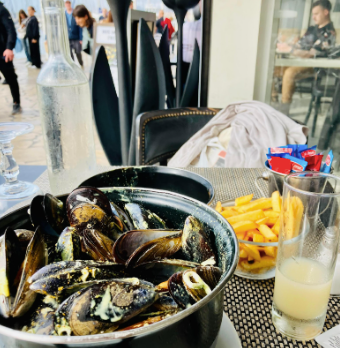
I had a mission for my lunch. I was on the hunt for escargot (snails)–a must-have when in France— and I perused all of the menus as I walked by the pretty restaurants lining the marina. Alas, none of
them served escargots, and even the ones that supposedly had them per Google, also politely told me “Non.” I was disappointed but decided to make do with Moulle (mussels) which were plentifully.
offered, with many a tasty sauce. For about
$12E, one can get a huge bucketful of these, with some crunchy bread on the side.
I also ordered something else that I wanted to try in Provence–a Pastis. Now the thing about Pastis is that it is served a quarter of a glass, a thick milky liquid, with just a chunk of an ice cube, and you are supposed to add water to it before drinking as the alcohol level is a cool fifty percent. I didn’t know any of this and when I took a small sip, my taste buds jolting
up in joy at the amazing anise flavor, I continued sipping until I almost reached the end while reading all about how one is supposed to have the drink! Needless to say, I had quite a delicious buzz while enjoying my Moule on that hot afternoon.
Pastis joins my list of absolute favorite French foods. Some others that I moon over in the grocery aisles: yogurts and mousse. There is something about the way the French make milk-based products that is exactly right for me, especially the lightness of the desserts. Mousse is, after all, their invention, and nothing can beat even a grocery branded one from a French store.
After a day of swimming in the craggy waters of Plage de la Mitre, for my dinner in Toulon, I picked up a fish and basmati rice meal for three euros at an Aldi, a chocolate croissant for the next day, and of course, some wine and mousse and brought it back to my room. My Airbnb was on the fifth floor, giving me a beautiful view of the water, a cute dining table placed right by the window, where I ate my simple meal. I ate lovingly, savoring every bite, grateful for this lovely experience, grateful for the courage I took to step out into a weird, wacky lifestyle which let me experience such moments. I
would’ve never known if I had not stepped out.
For more travel stories, and the complete adventure: https://unmooredthebook.com/
See also: Morocco Tour Packages: Travel Made Effortless
FAQs
1. What is Pastis and why is it popular in Provence?
Pastis is an anise-flavored alcoholic drink that is especially popular in southern France, particularly in Provence. It is traditionally served as an apéritif and is deeply rooted in the local culture. People enjoy it slowly, often while sitting outdoors and socializing. Its refreshing taste, especially when diluted with water, makes it perfect for warm Mediterranean climates.
2. How should Pastis be properly consumed?
Pastis is usually served in a small amount with ice, and water is added to dilute its strong alcohol content. When water is mixed in, the drink turns into a cloudy, milky color. This process not only reduces the intensity but also enhances its flavor, making it smoother and more enjoyable.
3. What makes Provence a unique travel destination?
Provence stands out because of its blend of natural beauty, artistic heritage, and relaxed lifestyle. Visitors can experience everything from beaches and mountains to vineyards and historic villages. The region also offers a slower pace of life, allowing travelers to fully immerse themselves in its culture, food, and scenery.
4. What are the must-try foods in Provence besides Pastis?
Some must-try foods in Provence include moules (mussels), fresh seafood, olive-based dishes, local cheeses, and light desserts like mousse. The region is also known for its rosé wine and fresh produce, which are often used in simple yet flavorful meals.
5. Is Toulon worth visiting compared to other French coastal cities?
Yes, Toulon is definitely worth visiting, especially if you prefer a quieter and more authentic experience. While it may not be as famous as Marseille or Nice, it offers beautiful scenery, a rich naval history, and a relaxed atmosphere. Its marina, old town, and nearby beaches provide a perfect mix of culture and leisure.